Penfessionals are committed to provide to their clients the highest level of professionalism and creativity in our writing and editorial services in order for them to achieve their most ambitious goals in business and everyday life.


Monday, December 7, 2009

Wikipedia: Defining "Active and Passive" voice! by Ryan S.


Wikipedia, the poor man's dictionary or all encompassing "know-it-all" on the web! Either way you look at it, there is a TON of information on that site. http://www.wikipedia.org. I have been tasked with using Wikipedia to explain Active and Passive voice, as it pertains to Wikipedia and everyone who has contributed to it.

First off, for those of you who have no idea what Wikipedia is (Where have you been?!), let me explain. It's a free, web-based, collaborative, multilingual encyclopedia project supported by the non-profit Wikipedia Foundation. It's a website where anyone from all over the world can post information pertaining to events, history, etc.

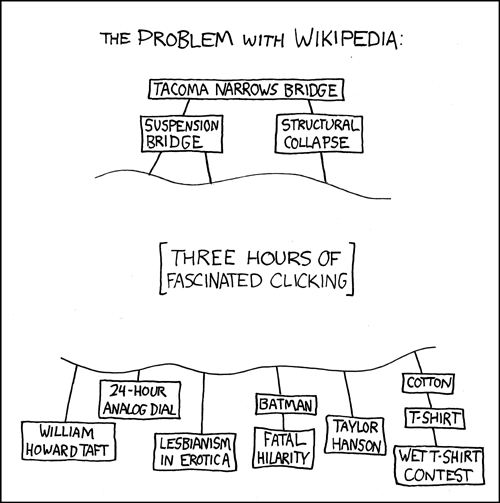
COOL PIC ABOUT WIKI

All you need to do is sign-up and WALL-LA! So now that we know what Wikipedia is lets continue on to the "Topic" at hand!

The following words defined by Wikipedia:

Active Voice:
In grammar, the voice (also called diathesis) of a verb describes the relationship between the action (or state) that the verb expresses and the participants identified by its arguments (subject, object, etc.). When the subject is the agent or actor of the verb, the verb is in the active voice. When the subject is the patient, target or undergoer of the action, it is said to be in the passive voice.

For example, in the sentence:

The cat ate the mouse.

the verb "ate" is in the active voice, but in the sentence:

The mouse was eaten by the cat.

the verbal phrase "was eaten" is passive.

Passive Voice: In English, as in many other languages, the passive voice is a grammatical voice in which the subject receives the action of a transitive verb. Passive voice emphasizes the process rather than who is performing the action. Passive (or passive verb[1]) refers more generally to verbs using this construction and the passages in which they are used. In English, a passive verb is periphrastic; that is, it does not have a one-word form, but consists of an auxiliary verb plus the past participle of the transitive verb. The auxiliary verb usually is a form of the verb to be, but other auxiliary verbs, such as get, are sometimes used. The passive voice can be used in any number of tenses. The process of changing an active verb into a passive one is called passivization. Passivization is a valence-decreasing process, and it is sometimes referred to as a detranzitivizing process, because it changes transitive verbs intro intransitives.[2]

In the following passage from the Declaration of Independence, the passive verbs are bolded, while the active verb hold and the copulative verb are are italicized:

We hold these truths to be self-evident, that all men are created equal, that they are endowed by their Creator with certain unalienable Rights, that among these are Life, Liberty and the pursuit of Happiness.

One can still introduce the actor of a passive verb using a by phrase as was done in the example above. When such a phrase is missing, the construction is called an agentless passive. Agentless passives are sometimes preferred in official writing because they are less confrontational, for instance when announcing someone's firing. Agentless passives are also used in scientific writing, where they are intended to provide an objective description in terms of processes rather than people. Using an agentless passive, a scientist may write:

The mixture was heated to 300 °C.

without saying who actually did it, which is (or should be) irrelevant as far as the scientific process goes. This approach to scientific writing is not universally accepted, and some US organization, like the The Council of Biology Editors, have called for a more direct, active voice approach. Another entrenched use is the double passive construction used in American court reporting.[1]

The active voice is the dominant voice in English at large, and many commentators, notably George Orwell in his essay "Politics and the English Language" and Strunk & White in The Elements of Style, have urged that the use of the passive voice should be minimized. However, there is general agreement that the passive is useful when the receiver of the action is more important than the doer.[3]

In closing please note one thing, and that is that Wikipedia is free but also some of the information is not 100% accurate so please check the sources. Thank you!


References: http://en.wikipedia.org/wiki/What_is_wikipedia
http://en.wikipedia.org/wiki/Passive_Voice
http://en.wikipedia.org/wiki/Active_Voice

Are your resources worthless? Brandon Collier


We all have had those dreadful research papers to write. You know the ones, there the ones you have to look up all the random information that you will probably just forget about the second your done writing your paper. But how do you find that information and know if it is worthy of making it into your paper? Well you’re just in time!!! I have put together a few ideas that may help you find and evaluate the material that you use in your research paper.

· Books – In general books are a great source of information. But take into consideration who wrote the book. If it is an encyclopedia or a book published by a school or library it is almost certain that you may use it. But be careful with using other books the more you read up and understand a subject the more you will know if you can trust a certain material or not.

· Internet – The internet is full of information at your fingertips. But is that information correct? Again if the information is from an encyclopedia site it is most likely okay to use. But if is from a site such as Wikipedia it is probably not what your professor or reader is looking for. Sites like Wikipedia allow anyone to put information on there.

· Journals/Newspaper – Journals and Newspapers are another great way to find information. But in doing so you have to take a few things into consideration. One thing would be the way they write. You need to know whether the writers of a certain newspaper or journal are biased in the way they present the material. If so this is probably not the best thing to use. If you do use this source you may want to say something about it in your writing.


Hopefully these few tips can help you in all of your research paper writing needs.


Citation
Lombardi, Esther. "How to Evaluate Sources". About.com. November 18, 2009 .

Here are some pointers to become a successful business writer from Daniel R


The most import advice I can give to someone trying to become a successful business writer is get to the point. You need to make your writing flow as if you were talking; by keeping it simple it makes it easy for the reader to comprehend.

One way to become successful at writing whether it is business writing or any other kind of writing is keep your work organized. I know in my work if I am not organized it is easy for the reader to know that I am not. To help organize your work your can think differently, instead of thinking of all the stuff you want to say, tell the reader what they want to know. Organization essential is another way of keeping it simple and to the point.

To me business writing is all about how you say it. There are other ways to get your point across to the reader other than being negative. Here are some tips from SyntaxTraining, "state what to do- not what to avoid", "say what you can do- not what you can't", "use neutral instead of blaming language". Being positive will come off to the reader a lot better than blaming them or being negative.

Just like in the last paragraph the writer needs to know where and when to put passive words. Knowing where to put passive words helps the writer not look intimidated or harsh. Being able to change wordy phrases into direct ones also helps keep your writing straightforward. The time to use passive phrases is when you don't know who did the action, when it doesn't matter who did the action, when your trying not to blame someone, or if you want to be less directive.

I think if you follow these steps you can be on your way to becoming a successful business writer. You need to keep your work simple and to the point, organized and easy to read, and know when to be directive or passive.


References:
http://www.syntaxtraining.com/business_writing_tips.html
http://www.businesswritingblog.com/business_writing/writing_tips/

Tips On How To Work For More Than Just Tips - By Takamasa Y and Brandon C

Here is a movie that gives you tips for your next job interview. Enjoy!

Thursday, December 3, 2009

Leah K. Guidelines for Writing Technical Instructions

The title, Guidelines for Writing Technical Instructions, sounds scary, right? Well it doesn't have to be. Chances are someday you might have to use this stuff someday! One of the most common and one of the most common uses of technical writing is instructions. Remember all those step-by-step explanations of how to do things like creating something, operating something, and fixing something. I sometimes have been infuriated with poorly written instructions, causing more harm than good! That is the result of horribly written technical instructions. I would hate for any of my readers to fall into that fate. Let's jump right into the guidelines!


1. Determining Preliminaries

-This includes defining your audience and readers. Determine if you consider them experts, technicians or non specialists. In other words, if I were writing instructions for using facebook for a group of elderly people, I probally would have to start with "press glowing button to turn on computer."
-An important consideration is how many tasks there are in the procedure you are writing instructions for. Some instructions have only a single task, but have many steps within that single task. I have put together a desk where there was over 50 steps! A nice way to handle this is to group similar and related steps into phases, and start renumbering the steps at each new phase.

2.Common Sections of Instructions
Rather than writing it all out, you can see exactly how the sections should be lined up! Enjoy!


3. Introduction
The first section needs to indicate a few things to the readers.
-The specific task that will be explained.
-The level of expertise the reader needs.
-General idea of what the process accomplishes.
-Indicate when the instructions should not be used.
-Provide general warnings. (Ex: assembly of a electric fence might indicate a shocking factor.)

4. Equipment and supplies
Most instructions include a list of materials and equipment you will need to complete a task. I, like most people, skip over the materials and right to the procedures. I usually find myself having to run to the store in the middle of the project for missing materials!

5. Choose A Step Style
Fixed order steps are steps that need to be presented in the order they need to be performed. Those are my favorite. Variable order can be performed in any order. Nested steps are lengthy processes that need to be broken into subsets using letter and numbers. Every once in a while I run into "stepless" steps where the information is scattered everywhere.

6. Make it Easier for the Reader

Use graphics and picture to guide the readers! We all know that a picture is a thousand words, and a picture is the best suggestion I can give anyone on writing technical instructions. Also, format your instructions with bolding to provide emphasis on certain important notices.

This is an example of a person using interactive media to create technical instructions on Micrsoft Word.

Could technical writing be any easier? Well now it is easy for you and your readers!


http://www.io.com/~hcexres/textbook/instrux.html

Monday, November 30, 2009

Jessica T's Job Skills Checklist

A job skills checklist is a group of skills that are listed out, making it easier for someone to be able to come up with skills. Then you circle all the skills that apply to you & put down some examples of how you used the skills you circled. The skills that are listed on the checklist are put into categories by job description.

http://www.youtube.com/watch?v=L6aXkyqzDMY

Job Skills Checklist
Company Name:
Open Position:
E-mail:
Phone Number:

Seeking/ Filling
Sales
Marketing
Operations Management
Consulting
Other

Professional Skills
Consulting
Bar code Implementation
Design Specifications
Field Service Technician
Network Configuration

Product Experience
Motion control
Robotics
Motor Drives
Network Products
PLCs

Design/ Drafting Tools
Rebis
RSWire
Via
SolidWorks
CimLogic

Languages
Chinese
English
French
German
Spanish

Ryan S presents; Sample Letter of Acceptance for a J.O.B.


The day's are winding down, we are signing up for commencement (have you?!) and have hopefully began are job search (months ago!). In the past few week's a few students have written some great blogs on such matters as. "Job Interview Tip's" by Leah, and Jessica decided to be "Super Student" one week and submit not one, but two blogs "Preparing an Effective Resume", and "Preparing an Effective Cover Letter." way to go CHAMP! ;)

So what do you/we/me/her/him do next, once a job offer has been presented/offered to you? Well write an "Acceptance Letter" of course. Below is an example of a proper acceptance letter.


As one can tell this is a very clear, short, and to the point Acceptance Letter. It should be noted that when writing an Acceptance Letter to re-state clearly the following...


  1. Thanks and appreciation for the opportunity
  2. Start date
  3. Agreed upon salary
  4. Any benefits, bonuses etc
  5. And any other promised/agreed upon terms


Why you might ask? Because an Acceptance Letter is, in a way, a contract between two parties (you and your future employer), informally. If one party should fail to deliver on, one or more said, promises then one has reason to seek possible legal action. Does this type of thing happen often? No, at least I would say 99% of the time it doesn't (that's my own random stat). Could it happen, yes.

For instance it happened to me once. I'll spare you the whole messy details and skip to the short of it. I took a job offer, and I and my future company both agreed verbally that a curtain amount of money would be provided for a car allowance after six months of employment. Once the six months came around they tried to back track and say something different and since I never had it formally in writing I was pretty much S.O.L. Eventually I received what was promised to me, but in the long-run the damage was done and I left the company. This all could have been avoided if I had proof of what was agreed upon before working for this company, one way would have been within a "Formal Acceptance Letter".

So when the day come's to accept your first real "Big Girl/Boy" job remember that an "Acceptance Letter" is good business etiquette. If nothing else it's to reinforce agreed upon terms and conditions for your sake!


References:
http://www.quintcareers.com/sample_accepting_letter.html
http://jobsearch.about.com/od/careeradviceresources/qt/jobaccept.htm
IMG: http://campusapps2.fullerton.edu/Career/images/jobsearch/letter_06_accept.gif